
Lessons from ‘Winnie-the-Pooh’ help me navigate life with CAD
Pooh’s patience and Piglet’s pluck provide this patient with peace
Written by |





“Here is Edward Bear, coming downstairs now, bump, bump, bump, on the back of his head, behind Christopher Robin. It is, as far as he knows, the only way of coming downstairs, but sometimes he feels that there really is another way, if only he could stop bumping for a moment and think of it.”
This is the perfectly satisfactory beginning to “Winnie-the-Pooh” by A. A. Milne. I say perfectly satisfactory because I often think this is how I go through life — being dragged upside down, backward, and thumping my head on every obstacle in my path. Milne presents “Winnie-the-Pooh” (“Don’t you know what ‘ther’ means?”) so prosaically that I realize many people feel they also go through life this way.

CAD comparison
Since I am now working my way through the nausea and diarrhea caused by a bendamustine infusion, I began comparing my experience as a cold agglutinin disease (CAD) patient to characters from Milne’s books.
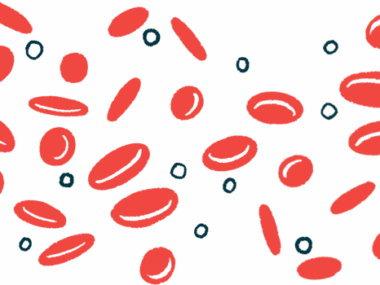
There is a problem with this comparison. Life in Milne’s Hundred Acre Wood is pure fiction, based on his son Christopher’s interactions with his stuffed animals. “CADdies,” as those of us with CAD sometimes call ourselves, have to deal with situations that are all too real. CAD is an autoimmune, hemolytic anemia in which our red blood cells are attacked and destroyed by our own bodies when the complement cascade is activated either by cold exposure or infection and inflammation. Pooh’s calamities are imagined.
Adaptations
The ninth chapter of “Winnie-the-Pooh,” titled “In Which Piglet Is Entirely Surrounded by Water,” embodies many of the challenges I face. Piglet, Pooh’s small friend and companion, finds it raining excessively at his house and needs to make an adaptation. I am always adapting to the weather: How cold will it be? What time will my activity be done? How cold will it be then?
Pooh also made his adaptations. Piglet’s preparations were a bit passive, but Pooh took an active response to the worsening weather. He left on his vessel of a honey jar and voyaged until he was safe with Christopher Robin. I think my recent journey from Indonesia to Alabama is comparable. I did the best I could at home to rest and meet my CAD needs, but eventually, I had to set out and find help in the U.S.
Many CADdies can lead active lives; I’ve even heard of one who’s able to run marathons! But most of us have a gentle, take-life-as-it-comes outlook. Like Pooh, Piglet, Christopher Robin, Eeyore, and the others, I draw strength from my connections. My friends Jean, Jane, and Terri often take me out for luncheons, pedicures, and encouraging talks.
My family rallies around me, ensuring that I can travel where I need to go, have the necessary food and assistance, and feel included. Like the creatures from the Hundred Acre Wood, interconnectedness fills my days. This is important to CADdies.
Affections
I enjoy the world of whimsy and gentle make-believe. It is a good escape from the jagged jabs of needles and veins reluctant to accept the inevitable. At present, I am lying in bed — something my nurse told me not to do — resisting a bout of nausea. I’m hoping my energy will rebound quickly, but in reality, I’m expecting a slow, monthslong rebuilding period.
Next Sunday, Jan. 18, is National Winnie the Pooh Day, a day to honor my lifelong friends. I had a super-sized coloring book featuring the original illustrator E. H. Shepard’s work, and I spent many days mentally immersing myself in the drawings. I might get out some of my now-grandchildren’s toys, hug Kanga, and tell Eeyore that I hurt, too.
My life has changed since I developed CAD, with my health limitations resulting in a new normal. But I have learned a lot of resilience and life lessons from my childhood friends: gentle acceptance, turning battles into stories, keeping a positive outlook, and sometimes just saying “bother.”
Note: Cold Agglutinin Disease News is strictly a news and information website about the disease. It does not provide medical advice, diagnosis, or treatment. This content is not intended to be a substitute for professional medical advice, diagnosis, or treatment. Always seek the advice of your physician or other qualified health provider with any questions you may have regarding a medical condition. Never disregard professional medical advice or delay in seeking it because of something you have read on this website. The opinions expressed in this column are not those of Cold Agglutinin Disease News or its parent company, Bionews, and are intended to spark discussion about issues pertaining to cold agglutinin disease.

Natalie Sirota
Thank you for this lovely Pooh related content, Mary. I am also a big Winnie-the-Pooh fan and recently purchased a lovely Life magazine tribute edition for his 100th birthday. My rare disease list also includes Raynaud's as does my daughter's along with her Familial Cold Autoinflammatory Syndrome type 2. We both also live with angioedema. What a fascinating bio you have as well. Blessings to you.