
After a trip to the ER, I’m figuring out how to strengthen my immune system
Due to immunosuppression, an infection wreaks havoc on this columnist's body
Written by |





Early Sunday morning on Jan. 18, I called 911 for my first-ever ambulance ride as a patient. I was in extreme pain in what seemed to be every joint in my body. On the way, I was diagnosed with a slight fever. And that was just the beginning.
I was immediately taken to an examination room and put on Tylenol to help bring down the fever. I hadn’t thought a fever of slightly over 100 F needed treatment. Instead, I believed it would be better for my body’s natural immune system to fight it, and I’d supplement that with medicine if necessary. Boy, was I wrong.
Patiently, the nurses and the doctor explained to me that with an autoimmune disease like cold agglutinin disease (CAD), I have no effective immune system to fight an invading infection. I needed help from the git-go!
I already knew I was immunosuppressed — I just wasn’t aware of how immunosuppressed my body is. I learned a lot that Sunday.

Yet another threat
The emergency room personnel performed the standard diagnostic activities, taking some blood for a complete blood test. Since I had chemotherapy earlier that month, my lymphocyte count — a type of white blood cell that helps the body fight disease and infection — was abysmally low.
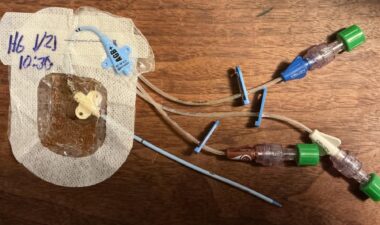
The IV line that was used to deliver adrenaline to columnist Mary Lott while she was in the hospital. It was inserted in her jugular vein and stopped close to her heart. (Photo by Mary Lott)
As the day wore on, the focus turned from relieving my intense joint pain and fever to figuring out what type of infection I had. But then something worse happened: My blood pressure continued dropping, finally reaching 50-something over 20-something. The doctor decided to give me adrenaline via an infusion device into my superior vena cava. Truth be told, this procedure genuinely scared me.
The doctor numbed my neck and put an IV line into my jugular vein. The tip of it ended up about a centimeter above my heart. This specialized IV delivered adrenaline for approximately 12 hours.
The strategy worked. My blood pressure stabilized between 90 and 120 over 60 or 70. I still had excruciating pain in all of my joints, and I was as weak as a newborn puppy, but at least the crisis was over.
I was then transferred to the intensive care unit, where I was tested for everything from measles to malaria, and arthritis to Zika. Since I had recently returned to the U.S. from the tropics, no disease was ignored.
The ER doctor thought I had sepsis, a very dangerous condition in which the body’s organs are overwhelmed by infection and inflammation. I heard someone else mention that a cytokine storm might have caused the sepsis.
This was not how I planned to spend January. The challenge now is to strengthen my immune system so that this situation never happens again. But that’s not an easy task.
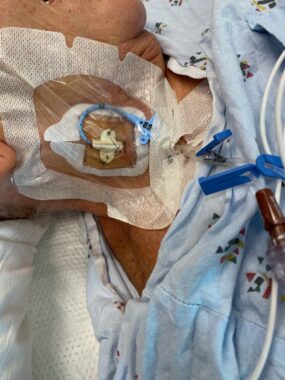
Columnist Mary Lott says she felt like “Frankenstein’s Monster” while in the hospital receiving an adrenaline infusion that saved her life. (Photo by Mary Lott)
Strengthening my immune system
Once I was stable and the brain fog lifted, I started researching ways to prevent this situation in the future. I learned that several interconnected factors affect the immune response. Among them are diet, exercise, age, and psychological stress. I can control my diet, but exercise is largely influenced by my hemoglobin numbers. My age was determined sometime in 1954 and out of my hands entirely. I can work on my psychological stress by finding a good counselor.
It seems the factors most under our control involve food, sleep, and hygiene. I am trying to eat more healthily to help me control my weight. I’ve taken steps to create a better sleep environment and become extra vigilant about controlling germs in my living areas.
Additionally, I’m trying to spend more time in the sun to build up my vitamin D. As the temperatures on my patio rise, I’ll try to spend more time in my hot tub. Not only would I benefit from warm water therapy, but I also suspect that the water’s movement will improve my blood circulation.
Currently, the final word concerning improving immune system defenses seems to be, “Do your best, follow the guidelines, and good luck.” I’m not happy with that, though. When it comes to the immune system, I agree with a popular quote: “What we know is a drop; what we don’t know is an ocean.”
Note: Cold Agglutinin Disease News is strictly a news and information website about the disease. It does not provide medical advice, diagnosis, or treatment. This content is not intended to be a substitute for professional medical advice, diagnosis, or treatment. Always seek the advice of your physician or other qualified health provider with any questions you may have regarding a medical condition. Never disregard professional medical advice or delay in seeking it because of something you have read on this website. The opinions expressed in this column are not those of Cold Agglutinin Disease News or its parent company, Bionews, and are intended to spark discussion about issues pertaining to cold agglutinin disease.



Judy Jennett
So sorry to hear this, sending prayers and good wishes your way