For US woman, CAD exacerbates iron disorder, leading to liver damage
Case report details patient, 48, with most common iron overload condition
Written by |
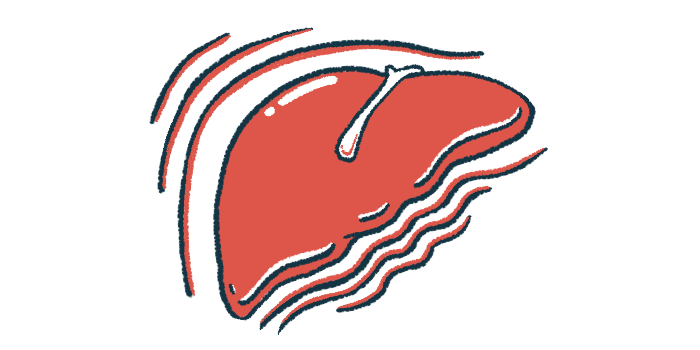




A combination of cold agglutinin disease (CAD) and previously undetected hemochromatosis, a condition marked by excessive iron accumulation in the body’s organs, was likely the cause of severe liver damage in a woman in her 40s in the U.S., a case study reports.
Although the woman carried only one copy of a hemochromatosis-causing mutation, which typically causes no symptoms, the coexistence of CAD, which increases iron levels available for deposits in tissues, likely contributed to her liver damage, the researchers noted.
The team said the woman’s experience — she developed liver enlargement a year after her CAD diagnosis — highlights the challenges of treating a patient with “two rare [blood] conditions that affect the body very differently, thus complicating diagnosis and treatment.”
According to the researchers, this case “represents a rare instance of symptomatic heterozygous hemochromatosis due to underlying [CAD],” the researchers wrote. “In patients with an atypical presentation, a thorough investigation must be performed to evaluate for contributing [blood] conditions.”
Heterozygous hemochromatosis occurs when a person inherits only one mutated gene instead of two.
The study, “A Rare Case of Severe Cold Autoimmune Hemolytic Anemia in a Hemochromatosis Carrier,” was published in the journal Case Reports in Hematology by researchers in Ohio.

CAD is caused by self-reactive antibodies, called cold agglutinins, that bind to red blood cells at cold temperatures, causing them to stick together. This recruits proteins from the complement cascade, a part of the immune system, ultimately leading to red blood cell destruction, known as hemolysis.
Low counts of red blood cells, or anemia, impair the transport of oxygen throughout the body, causing symptoms such as fatigue, shortness of breath, and rapid heartbeat.
Woman’s genetic disorder complicated by CAD
Hemochromatosis is a genetic disorder that causes the body to absorb too much iron from the diet, leading to excessive iron accumulation in tissues and organs, including the liver and heart. It is commonly caused by mutations in both copies of the HFE gene.
“Classically, heterozygous [hemochromatosis] patients present with no overt organ dysfunction,” the researchers wrote.
Now, a team from the University of Toledo College of Medicine and Life Sciences described the case of a 48-year-old woman with cirrhosis, or irreversible liver scarring, that was secondary to heterozygous hemochromatosis complicated by CAD.
Her previous medical history included obesity, smoking, and alcohol use disorder. She also had bile stones that were removed through surgery.
In January 2023, she was diagnosed with CAD after experiencing fatigue, shortness of breath, and rapid heartbeat. Blood tests revealed anemia, elevated immature red blood cell counts, and reduced haptoglobin levels, all markers of hemolysis.
After ruling out other conditions, like infections, gastrointestinal bleeding, and other blood disorders, the woman was suspected to have CAD. The diagnosis was confirmed by high levels of cold agglutinins and a positive direct Coombs test, which detected both antibodies and complement proteins bound to red blood cells.
She received blood transfusions and was started on anti-inflammatory corticosteroids and rituximab (sold as Rituxan and Mabthera, with biosimilars available), a therapy that kills antibody-producing immune B-cells. She also received iron and vitamin supplements to promote red blood cell production.
Although the woman’s anemia initially eased, its subsequent worsening led clinicians to recommend surgery to remove the spleen, where B-cells mature. She underwent the surgery three months after the CAD diagnosis, which, together with rituximab and other immunosuppressants, lessened her anemia.

Blood transfusions avoided to prevent excess iron exposure
However, after about a year, she developed leg swelling and liver enlargement. Leg swelling was treated with diuretics, medications that help the body remove excess fluids by causing the kidneys to produce more urine.
The fact that she also showed elevated blood levels of ferritin, an iron-storage protein that’s highly produced by the liver, prompted doctors to test for hemochromatosis. Genetic testing identified the hemochromatosis-causing C282Y mutation in only one HFE gene copy, leading to a diagnosis of heterozygous hemochromatosis.
The woman was hospitalized a month after her diagnosis, following a two months of abdominal swelling and weight loss — signs of severe liver damage. Her anemia had worsened, and she showed extensive freckling with a bronze skin tone, which is a hallmark symptom of hemochromatosis.
Imaging scans showed signs of cirrhosis, where irreversible liver scarring can affect the organs function and eventually lead to liver failure. Blood tests were indicative of problems with blood clotting, a sign of liver disease, and increased ferritin levels. A liver biopsy, meanwhile, confirmed iron accumulation, confirming the hemochromatosis diagnosis.
“Although heterozygous hemochromatosis is typically asymptomatic, the presence of [CAD] appears to have contributed to the patient’s liver dysfunction,” the researchers wrote.
Requiring different treatment regimens, the case underscores the difficulty of managing multiple rare [blood] conditions.
Chronic hemolysis in CAD “leads to increased [blood] iron that is available for tissue deposition,” the team wrote, adding that this, together with iron supplementation, “resulted in symptomatic heterozygous hemochromatosis, as evidenced by her cirrhosis symptoms.”
Her condition improved after paracentesis — a procedure to remove excess abdominal fluid — adjustment of diuretic dosage, and discontinuation of iron supplements.
Also, “blood transfusions were avoided to prevent excess iron exposure,” and “supportive strategies (e.g., maintaining a warm environment) were employed to limit hemolysis,” the researchers wrote.
After a five-day hospitalization, the woman’s abdominal swelling eased, and she was discharged home.
“Requiring different treatment regimens, the case underscores the difficulty of managing multiple rare [blood] conditions,” the researchers wrote.