Blood stem cell transplant complicated by temporary CAD in donor: Case report
Patient ultimately recovered after receiving second infusion from same donor
Written by |




A 27-year-old man undergoing a blood stem cell transplant to treat a blood cancer developed complications after receiving cells from a donor with unidentified, temporary cold agglutinin disease (CAD), according to a U.S. case report.
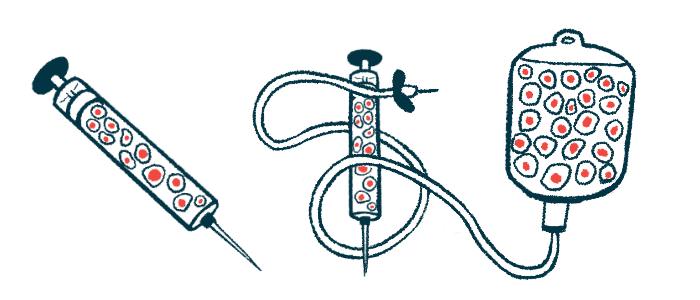
Blood stem cell transplant involves collecting blood cell precursors from a healthy donor and infusing them into the patient’s bloodstream. The researchers believe in this case of CAD secondary to an infection, cold agglutinins, the self-reactive antibodies that drive CAD, may have caused the donor’s blood cell precursors to clump, reducing the number of viable cells delivered during the transplant.
The man ultimately recovered after receiving a second infusion of stem cells from the same donor, who subsequently tested negative for cold agglutinins at the time of cell collection.
“This report is significant as it highlights how transient [temporary] donor [secondary CAD] can affect stem cell product integrity and recipient outcomes,” and “the need for comprehensive donor evaluation and management strategies to mitigate adverse effects on recipients,” the researchers wrote.
The report, “A Cold Case: Cold Agglutinin Disease Complicating Stem Cell Transplant,” was published in Case Reports in Transplantation.

Secondary CAD is typically temporary
CAD is caused by cold agglutinins that bind to red blood cells at cold temperatures, causing them to stick together and be marked for destruction (hemolysis). It is classified as primary when the cause is unknown or secondary when it occurs due to other conditions, like infections. Secondary CAD, also known as cold agglutinin syndrome (CAS), is typically temporary.
Blood stem cell transplant, also known as hematopoietic stem cell transplantation (HSCT), is a potentially curative treatment for many life-threatening blood disorders, including blood cancers.
This procedure initially involves intensive conditioning therapy, or high-dose chemotherapy, to eliminate the person’s own diseased blood cells and prepare the body to accept healthy donor cells. Healthy blood cell precursors from a donor or the patient themselves are then infused into the patient, ultimately replenishing their blood cell pool.
Although adverse reactions during the infusion of donor cells are relatively common, they are usually mild and rarely affect transplant success.

Transplant complicated by presence of cold agglutinins in sample
In this report, a team of researchers in the U.S. described what they believe is the first known case of a stem cell transplant complicated by the presence of cold agglutinins in the donor sample.
The man in the case was diagnosed with refractory T-cell acute lymphoblastic leukemia, an aggressive blood cancer that affects immune T-cells, at the age of 27. After achieving a second remission, meaning no detectable signs of the cancer, following chemotherapy, doctors proceeded with an HSCT.
Blood cell precursors were donated by a partially matched, unrelated 30-year-old man. When the donor’s blood sample, containing a mix of blood cell precursors and red blood cells, arrived at the hospital, clinicians noticed red blood cell clumping and sediment inside the collection bag.
Further examination under a microscope revealed clumps of red blood cells in a configuration typical of CAD, strongly indicating the presence of cold agglutinins.
Doctors then learned that the donor had recently experienced an upper respiratory infection, which had been treated with antibiotics and whose symptoms had resolved before the donation. The researchers believe the infection likely triggered secondary CAD, leading to the presence of cold agglutinins in the donated sample.
Because the patient had already received intensive conditioning therapy and no backup donor was immediately available, doctors decided to proceed with the infusion despite the findings. The bag containing the donor’s cells was kept warm throughout the procedure to resolve visible clotting and prevent cells from sticking to the infusion line.
About one hour later, the patient developed a high fever, chills, a rapid heart rate, and high blood pressure. Blood tests showed low blood cell counts, which can be common soon after HSCT, and mild signs of hemolysis.
The man was started on antibiotics as a precaution and medications to treat a possible transfusion reaction and a persistent fever. The fever resolved the following morning, and his condition stabilized.
Patient remained in remission 6 months after second transplant
Over the following weeks, the man experienced several complications related to the transplant, including infections. Although these complications eventually resolved, his blood cell counts remained low, suggesting the transplanted cells were not restoring normal blood production — a complication known as poor graft function.
The researchers suggested that the donor’s blood cell precursors likely clumped together due to cold agglutinins, reducing the number of viable cells delivered during the transplant.
“In our case, the donor exhibited evidence of cold agglutinins but lacked clinical features of CAS, suggesting a transient … phenomenon,” the researchers wrote.
Tthe team collected blood cell precursors from the same donor more than three months after the original transplant. The donor was tested for cold agglutinins before collection and results came back negative.
Following the second infusion of blood cell precursors, the man’s blood cell counts gradually normalized. Six months after the transplant, he remained in remission.
Donors with CAD, “even when secondary and transient, can contribute to infusion reactions and potentially poor graft outcomes,” the researchers wrote. “In urgent transplant settings, where the donor product must be used, clinicians should anticipate complications and prepare accordingly.”